


 Payment
 Sezzle Financing
 Warranty
 Shipping Policy
 Track Your Order
 Return & Refund
 User Manual
 Contact Us
 FAQs
FAQs
Cold weather is one of the biggest factors that can change how far your e-bike can travel on a single charge. If your e-bike normally delivers a certain range in mild weather, you may notice that the battery drains faster and the estimated range drops as temperatures fall.
For Canadian riders, this is especially relevant. Winter temperatures can fall well below freezing, and factors such as snow, wind, low tire pressure, heavier clothing, and slippery roads can all increase the energy required to ride.
The good news is that cold-weather range loss is usually temporary. In most cases, the battery has not suddenly lost its permanent capacity. Instead, low temperatures change the way a lithium-ion battery performs.
This guide explains why cold weather reduces e-bike range, how much range you might lose, whether riding below freezing is safe, and what you can do to get the most from your battery during a Canadian winter.
Does Cold Weather Really Reduce E-Bike Battery Range?
Yes.
Most modern e-bikes use lithium-ion batteries, and lithium-ion batteries perform differently at low temperatures. As the temperature drops, the battery's internal chemical reactions become less efficient. This can temporarily reduce the amount of usable energy available to the motor.
Shimano, for example, specifically notes that when its e-bike batteries are used or charged at 5°C (41°F) or below, riding distance can become shorter and battery consumption can increase. The company also states that the battery can return to normal performance when it returns to a normal temperature.
That distinction is important:
Cold weather can reduce your usable range without permanently reducing the battery's actual health.
So if your e-bike normally travels 50 km under mild conditions, seeing a noticeably shorter range on a freezing morning does not necessarily mean your battery is worn out.
Why Does Cold Weather Drain an E-Bike Battery Faster?
There are several reasons.
1. Lithium-ion batteries work less efficiently in the cold
An e-bike battery stores energy through electrochemical reactions inside its cells. When temperatures fall, those reactions slow down.
As a result:
- The battery can deliver energy less efficiently.
- Internal resistance increases.
- Available capacity can temporarily decrease.
- Voltage can drop more quickly under load.
- The battery management system may limit power under certain conditions.
This is why you may see the battery percentage fall faster during a cold-weather ride.
The effect is particularly noticeable when temperatures approach or fall below freezing.
Importantly, this doesn't mean that cold weather automatically damages the battery. Battery manufacturers design lithium-ion systems to operate across specified temperature ranges. For example, Shimano lists operating temperatures below freezing for some of its e-bike batteries, while specifying a warmer range for charging.

2. Cold Weather Increases Rolling Resistance
The battery isn't the only thing affected by winter.
Cold temperatures can also affect your tires.
Air pressure tends to decrease as temperature falls. A tire that was properly inflated indoors may have noticeably lower pressure after spending time outside in freezing temperatures.
Lower tire pressure can increase rolling resistance, meaning the motor has to use more energy to maintain the same speed.
Snow and slush can increase resistance even further.
If you're riding through fresh snow, wet snow, or slush, your e-bike may need significantly more energy than it would on dry pavement.
Tip: Check your tire pressure regularly during winter rather than relying on a pressure setting you established during summer.
Always follow the tire manufacturer's recommended pressure range, especially if you're riding on snow or icy surfaces.
3. Cold Weather Can Increase Air Resistance
Cold air is denser than warm air.
That means your e-bike has to push slightly more air out of the way as you ride.
On its own, this isn't usually the biggest source of winter range loss. But combined with lower temperatures, strong winter winds, heavier clothing, and higher riding resistance, it can contribute to increased energy consumption.
A strong headwind can be especially noticeable.
If your usual commute is 20 km and you're riding directly into a strong winter wind, your motor may need considerably more energy to maintain the same speed.
4. Winter Riding Often Requires More Motor Assistance
Winter conditions can change the way you ride.
For example, you may use a higher level of pedal assistance because:
- You're wearing heavier clothing.
- Roads are wet or snowy.
- You're riding into stronger winds.
- Your tires have more rolling resistance.
- You're trying to maintain momentum on slippery surfaces.
- You're carrying additional winter gear.
Higher assistance means the motor draws more power from the battery.
This creates an important point:
Winter range loss isn't caused by battery temperature alone.
The combination of a colder battery and higher energy consumption can make the difference much more noticeable.
How Much E-Bike Range Do You Lose in Cold Weather?
There isn't one universal percentage.

The actual range reduction depends on several variables, including:
- Battery chemistry and capacity
- Battery temperature
- Outside temperature
- Riding speed
- Assist level
- Rider weight
- Tire pressure
- Terrain
- Wind
- Snow and road conditions
- Battery age
- Whether the battery is warmed before riding
This means you shouldn't assume that every e-bike will lose exactly 20%, 30%, or 40% of its range in winter.
A better way to think about it is:
| Riding conditions | Expected effect on range |
| Mild temperatures, dry roads | Close to normal |
| Around 5°C / 41°F | Some reduction may become noticeable |
| Around 0°C / 32°F | More noticeable range reduction |
| Below freezing | Range can decrease substantially |
| Very cold + snow + strong wind | Potentially significant reduction |
These are general riding considerations rather than guaranteed range figures. Your actual results will depend heavily on your e-bike and riding conditions.
For context, Shimano explicitly warns that battery consumption can increase and full-charge travel distance can decrease at temperatures of 5°C or below.
Does Cold Weather Permanently Damage an E-Bike Battery?
Normal cold-weather riding does not necessarily mean permanent battery damage.
In many cases, the reduction in range is temporary. Once the battery returns to a moderate temperature, its available performance can recover.
This is why you might notice something interesting during winter:
Your battery indicator may seem to drop unusually quickly during a cold ride, but after the battery warms up, the estimated state of charge or available performance may appear more normal.
However, cold-weather charging is a different issue.
Charging a lithium-ion battery at temperatures below its recommended charging range can cause permanent damage.
Battery University explains that lithium-ion batteries require particular care when charging at low temperatures and should be brought to a moderate temperature before charging.
Always follow the temperature requirements specified by your e-bike and battery manufacturer.
Can You Ride an E-Bike Below Freezing?
In many cases, yes—but you should check the specifications for your particular battery first.
Some e-bike batteries are designed to operate below 0°C. For example, Shimano lists certain batteries with discharge operating ranges beginning at approximately -10°C. However, its charging range is typically warmer, such as 0°C to 40°C.

That illustrates an important difference:
Riding and charging have different temperature requirements.
Your battery may be able to discharge energy while below freezing, while still being unsuitable for charging at the same temperature.
Never assume that because your e-bike can operate in freezing weather, it is safe to plug the battery in immediately after a freezing ride.
Never Charge a Freezing-Cold Battery Immediately
This is one of the most important winter battery-care rules.
Imagine this situation:
You finish a ride at -10°C, bring your e-bike inside, and immediately connect the battery to the charger.
Don't make that your normal routine.
Instead, allow the battery to warm to the manufacturer's recommended charging temperature before charging.
Bosch recommends charging and storing its batteries at room temperature during winter use, particularly when temperatures are below 0°C.
Shimano similarly specifies charging temperatures of 0°C to 40°C for several of its e-bike batteries.
A simple winter routine:
Ride → Bring battery indoors → Let it warm up → Charge
The exact temperature and waiting time should follow your battery manufacturer's instructions.
How to Maximize E-Bike Range in Cold Weather
You can't change the weather, but you can reduce the amount of energy your e-bike uses.
1. Start With a Warm Battery
If possible, store a removable battery indoors rather than leaving it outside or in an unheated garage.
Starting your ride with a battery at a moderate temperature can help reduce the performance penalty associated with extreme cold.
For longer winter rides, some manufacturers also recommend thermal protection for the battery. Bosch, for example, recommends thermal protective covers for longer journeys in cold conditions.
If your e-bike uses an integrated battery, follow the manufacturer's specific winter-use recommendations rather than attempting to modify or cover the battery yourself.
2. Keep Your Battery Out of Extreme Cold When Parked
If you leave your e-bike outside for several hours, the battery will eventually approach the outdoor temperature.
Whenever practical:
- Store the battery indoors.
- Avoid leaving it outside overnight.
- Don't leave it in an unheated location for long periods during extreme cold.
- Keep it away from moisture when storing it.
For long-term winter storage, follow the manufacturer's recommended charge level and temperature.

For example, Bosch recommends storing its batteries in a dry location between 0°C and 20°C and recommends approximately 30–60% charge for extended storage.
3. Use a Lower Assist Level When Conditions Allow
Your highest assist mode isn't always necessary.
If you're riding on relatively flat pavement, try using a lower assistance level and contributing more pedaling effort.
For example:
- High assist: More motor power → higher energy consumption → shorter range
- Moderate assist: Balanced motor support → lower energy consumption → longer range
You don't need to avoid higher assistance completely. Use it when you need it, particularly on hills or when accelerating.
The goal is simply to avoid using maximum assistance when it isn't necessary.
4. Keep Your Tires Properly Inflated
Winter is a good time to check tire pressure more frequently.
Underinflated tires create more rolling resistance and can reduce range.
At the same time, don't simply inflate your tires to the maximum pressure printed on the sidewall. Follow the pressure recommendations appropriate for your tires, riding conditions, and e-bike.
If you're riding in snow or on slippery surfaces, your preferred pressure may differ from your normal dry-road setup.
5. Slow Down When You Can
Speed has a major effect on energy consumption.
The faster you ride, the more energy is required to overcome aerodynamic drag.
A slightly lower cruising speed can therefore help preserve battery range.
This can be especially useful in winter because you're already dealing with several factors that increase energy consumption.
And there is another benefit: slower speeds give you more time to react to ice, snow, pedestrians, and other road hazards.
6. Plan Your Winter Route
The shortest route isn't always the most energy-efficient route.
A route with:
- fewer steep hills,
- better-maintained roads,
- less snow,
- less stop-and-go traffic,
- fewer exposed sections with strong headwinds,
may consume less energy even if it is slightly longer.
For winter commuting, route planning can be just as important as battery capacity.
7. Avoid Letting the Battery Get Extremely Low
Cold temperatures can make a low battery behave differently from a comfortably charged battery.
Shimano warns that using high assistance in low temperatures when the battery level is already low can cause the battery level to drop to 0% because of the characteristics of the battery.
For winter riding, it's therefore sensible to maintain a larger safety margin.

If you normally arrive home with 10% battery remaining, consider recharging earlier during particularly cold weather.
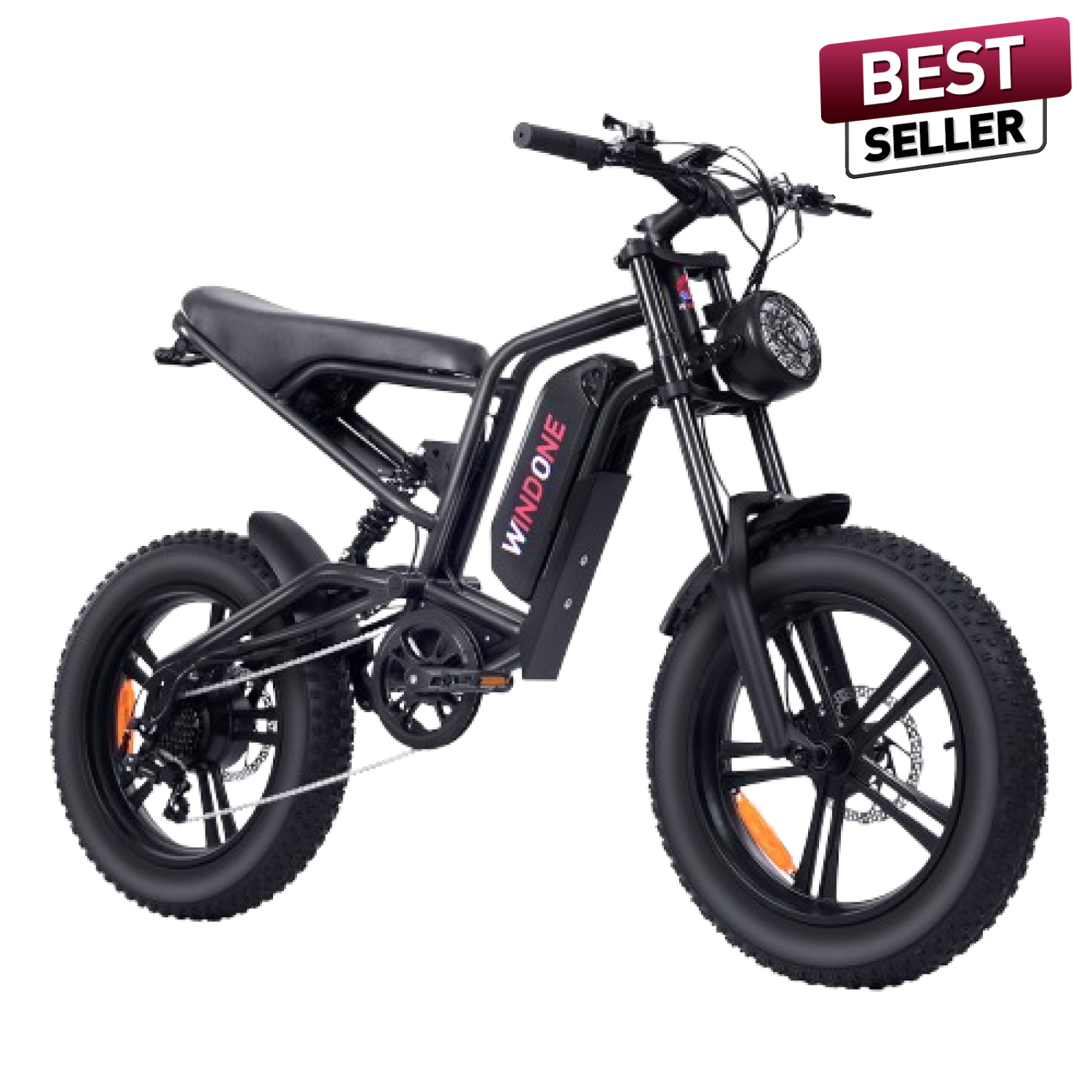
What About Windone E-Bikes in Canadian Winter?
Windone riders should apply the same basic lithium-ion battery principles used across the e-bike industry.
If you're riding a Windone e-bike during Canada's colder months, don't judge winter battery performance solely by the advertised maximum range.
An advertised range is generally measured under specific test conditions. Real-world range can vary depending on rider weight, speed, terrain, assist level, temperature, tire pressure, wind, and road conditions.
Winter combines several of these variables at once.
For example, a rider might experience:
Cold temperature + headwind + low tire pressure + higher assist + snow
That combination can reduce range much more than temperature alone.
So when planning a winter trip, it's better to treat the published maximum range as a reference point rather than a guarantee.
How to Prepare Your E-Bike for a Canadian Winter
Battery care is only part of winter preparation.
Before riding regularly in cold weather, check the entire e-bike.
Battery
- Check the battery charge.
- Inspect the battery and connectors for visible damage.
- Store removable batteries indoors when possible.
- Don't charge a freezing-cold battery.
- Follow the manufacturer's charging-temperature specifications.
Tires
- Check tire pressure.
- Inspect the tread.
- Look for cuts or damage.
- Consider whether your tire setup is appropriate for the conditions.
Brakes
Cold, wet, snowy, and icy conditions can change braking performance.
Check your brake pads, rotors, cables, and hydraulic systems before winter riding.
Lights
Winter means shorter daylight hours.
Make sure your front and rear lights are working properly and keep them clean.
Drivetrain
Salt, slush, and moisture can accelerate corrosion and wear.
Clean and lubricate the drivetrain according to the manufacturer's recommendations.
What Temperature Is Too Cold for an E-Bike Battery?
There isn't one temperature that applies to every e-bike.
Different batteries have different operating and charging specifications.
As examples, Shimano lists some batteries with discharge operating ranges beginning at -10°C, while charging may be limited to 0°C–40°C.

The important takeaway is:
Don't confuse the battery's minimum operating temperature with its minimum charging temperature.
Before riding in extreme Canadian winter conditions, check the specifications and owner's manual for your specific Windone model.
If temperatures are well outside the recommended operating range, it's better to postpone the ride or use another form of transportation.
Does Storing an E-Bike in the Cold Reduce Battery Life?
Extended exposure to extreme temperatures isn't ideal for lithium-ion batteries.
For winter storage, a dry, temperature-controlled environment is generally preferable.
If you're not going to ride your e-bike for an extended period, don't simply leave the battery fully charged in a freezing garage for several months.
Instead:
- Check the manufacturer's recommended storage temperature.
- Charge the battery to the recommended storage level.
- Store it somewhere dry and protected.
- Check the battery periodically.
- Avoid storing a damaged battery.
Bosch, for example, recommends a dry storage environment between 0°C and 20°C and approximately 30–60% charge for longer-term storage.
Always prioritize the storage instructions provided for your specific battery.
Does Winter Cold Reduce Battery Capacity Permanently?
Usually, temporary cold-related performance loss should not be confused with permanent battery degradation.
Think of it in two categories:
Temporary effect
Cold temperatures can temporarily reduce available battery performance and range.
Once the battery returns to a suitable temperature, performance can recover.
Long-term degradation
Battery aging is a separate process affected by factors such as:
- Charge cycles
- Time
- Heat exposure
- Storage conditions
- Charging habits
- Battery chemistry
- Overall usage
That's why a battery that performs poorly on a -15°C morning isn't necessarily a damaged battery.
However, repeated improper charging or storage outside the manufacturer's recommended temperature range can cause problems over time.
Frequently Asked Questions
Does cold weather make an e-bike battery drain faster?
Yes. Low temperatures can reduce battery efficiency and usable range. Cold weather can also increase energy consumption through lower tire pressure, stronger winds, snow, and higher motor assistance.
How much range will my e-bike lose in winter?
There is no universal percentage. The reduction depends on temperature, battery condition, riding style, terrain, wind, tire pressure, and road conditions. Expect the range to decrease more noticeably as temperatures approach and fall below freezing.
Can I ride my e-bike at -10°C?
Some e-bike batteries are designed to operate at temperatures around -10°C, but specifications vary. Check your Windone model's operating-temperature limits before riding in extreme cold.
Can I charge my e-bike battery when it is below freezing?
You should not assume that you can. Many lithium-ion e-bike batteries have a higher minimum charging temperature than operating temperature. Shimano, for example, specifies 0°C as the lower charging limit for several of its batteries.
Should I bring my e-bike battery indoors in winter?
If the battery is removable, storing it indoors in a dry, moderate-temperature environment is generally preferable to leaving it exposed to extreme cold for extended periods.
Does cold weather permanently damage an e-bike battery?
Normal cold-weather use can temporarily reduce available performance without permanently damaging the battery. However, charging or storing a battery outside its specified temperature range can cause damage, so always follow the manufacturer's instructions.
Why does my battery percentage drop quickly in the cold?
Low temperatures can increase internal resistance and reduce the amount of energy that can be delivered efficiently. The effect can be more pronounced when the battery is already at a low state of charge or when you're using high motor assistance.


