


 Payment
 Sezzle Financing
 Warranty
 Shipping Policy
 Track Your Order
 Return & Refund
 User Manual
 Contact Us
 FAQs
FAQs
Electric bikes are becoming a popular way to commute across Canada, especially in cities where riders often combine cycling with public transit. But one common question comes up again and again:
Can you put an electric bike on a bus in Canada?
The short answer is: sometimes, but it depends on the bus system, the bike rack, and your e-bike’s size and weight. Below, we break down how it works across Canada, what rules you should expect, and how to make bus + e-bike commuting smoother.
How Bike Racks on Canadian Buses Work
Most major Canadian cities equip buses with front-mounted bike racks, typically designed for two standard bicycles.

These racks:
- Are manually operated by the rider
- Hold bikes by the wheels (not the frame)
- Have weight and tire-width limits
⚠️ Important: These racks were originally designed for non-electric bikes, which affects whether an e-bike is allowed.
Are Electric Bikes Allowed on Bus Racks in Canada?
✅ Generally Allowed If:
- The e-bike meets weight limits
- Tire width fits the rack
- The bike does not resemble a moped or scooter
- Batteries are properly secured
🚫 Often Not Allowed If:
- The e-bike is too heavy
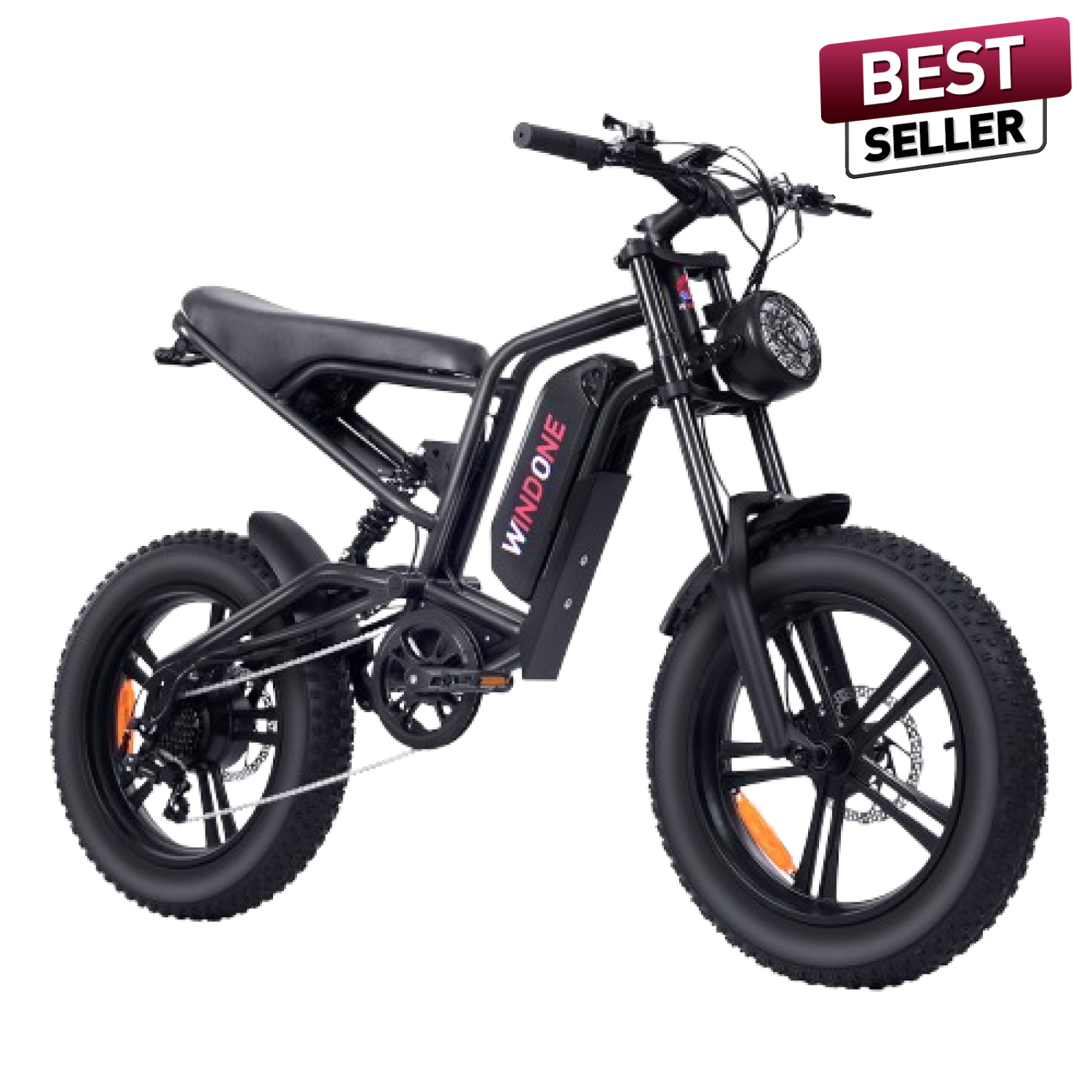
- It has fat tires that exceed the rack width
- It is a cargo e-bike
- It has a throttle-only design classified as a motor vehicle (rare, but possible)
Most Canadian transit agencies do not ban e-bikes outright, but they reserve the right to refuse bikes that don’t fit safely.

Typical Weight & Size Limits (What to Expect)
While exact rules vary by city, many Canadian bus systems follow similar rack specifications:
| Item | Typical Limit |
| Max bike weight | 20–25 kg (44–55 lbs) |
| Max tire width | ~2.1–2.5 inches |
| Wheel size | Usually 20”–29” |
| Number of bikes | 2 per rack |
👉 Why this matters: Many commuter e-bikes weigh over 25 kg, especially fat tire or long-range models.
City-by-City: What Canadian Riders Commonly Encounter
Policies can change, so always check your local transit authority before riding.

Toronto (TTC)
- Front-mounted bike racks on most buses
- E-bikes are allowed if they fit and are not excessively heavy
- Fat tire e-bikes often do not fit
Vancouver (TransLink)
- E-bikes are generally allowed on bus racks
- Weight and tire width restrictions apply
- Folding e-bikes are easier to bring on board
Montreal (STM)
- Bike racks are available on many bus routes
- E-bikes permitted if they fit standard rack dimensions
- Rush-hour restrictions may apply
Calgary/Edmonton
- Similar rack systems with size and weight limits
- Heavier e-bikes may be refused by drivers for safety
What About Folding Electric Bikes?

Folding e-bikes are usually the easiest option for bus commuters in Canada. Why?
- They can often be brought inside the bus
- Less dependent on rack size
- More flexible during off-peak hours
Many transit systems treat folded e-bikes like luggage, provided:
- They don’t block aisles
- They are clean and controlled
- They comply with the general onboard rules
Folding E-Bikes vs Standard E-Bikes for Transit
| Feature/Scenario | Folding E-Bikes | Standard E-Bikes |
| Bus Rack Compatibility | ✔ Excellent — usually fits or can be folded instead of using a rack | ✖ Limited — may not fit due to weight/size; racks often not designed for heavy e-bikes |
| Bring Inside Transit (Bus/Train) | ✔ Easy — compact when folded | ✖ Difficult — large and bulky |
| Storage at Home/Work | ✔ Very Convenient — takes minimal space | ✖ Needs more space |
| Weight | 🔹 Lighter (generally) | 🔸 Heavier |
| Wheel Size | ▶ Smaller (e.g., 16"–20") | ▶ Larger (e.g., 26"–29") |
| Ride Comfort (Long Trips) | 🔹 Good — but less stable on bumps | ✔ Better — larger wheels absorb road imperfections |
| Speed & Power | ✔ Often compliant with transit rules | ✔ Can be more powerful / higher battery capacity |
| Terrain Capability | 🔹 Best for paved/urban | ✔ Better for hills/trails |
| Ideal Transit Use Case | 🚎 Folding and inside bus/train | 🚍 Rack mount only if compact and within limits |
| Best For | Commuters combining multiple transit modes | Daily riders who rarely use transit |
Can You Bring an E-Bike Battery on the Bus?
Yes, in most cases. Canadian transit systems generally allow:
- Lithium-ion e-bike batteries
- Batteries that are properly enclosed
- Batteries that are not visibly damaged
Note: Open, damaged, or modified batteries may be refused for safety reasons.

When You Shouldn’t Rely on a Bus Rack
You may want to avoid combining your e-bike with a bus if:
- Your bike weighs over 30 kg
- You ride a fat tire e-bike
- You commute during rush hour
- Your route uses older buses without racks
In these cases, consider:
- Riding the full distance
- Using trains or light rail (which often have more flexible bike policies)
- Choosing a folding e-bike for mixed commuting
Tips for Bringing an Electric Bike on a Bus (Canada)
- ✔ Remove accessories (bags, baskets) before mounting
- ✔ Practice using the rack ahead of time
- ✔ Arrive early — racks are first-come, first-served
- ✔ Be courteous to the driver and other riders
- ✔ Have a backup plan if the rack is full

Final Verdict: Can You Put an Electric Bike on a Bus?
Yes, but with conditions. Electric bikes are increasingly accepted on Canadian buses, but size, weight, and rack compatibility matter more than the motor itself. Lightweight commuter e-bikes and folding models work best, while heavy or fat tire e-bikes are less reliable for bus transport.
If your commute depends on combining cycling and public transit, choosing the right e-bike style can make a big difference.
Looking Ahead
As e-bikes continue to grow in popularity across Canada, transit systems are gradually adapting. For now, understanding the rules and your bike’s specs is the key to a smooth bus + e-bike commute.


