 Payment
 Sezzle Financing
 Warranty
 Shipping Policy
 Track Your Order
 Return & Refund
 User Manual
 Contact Us
 FAQs
FAQs
Fat tire e-bikes are often associated with adventure riding, snow, sand, and off-road trails. But their wide tires can also make them surprisingly practical for everyday transportation.
For Canadian commuters, the appeal is easy to understand. A fat tire e-bike can provide extra traction and stability on loose surfaces, absorb some of the roughness of imperfect roads, and offer more versatility than a conventional road-oriented e-bike.
But that doesn't mean a fat tire e-bike is automatically the best choice for every commute.
The wider tires add weight and rolling resistance, and their advantages become less significant on smooth, dry pavement. Whether a fat tire e-bike makes sense for commuting depends on your route, weather conditions, storage situation, riding habits, and how much versatility you want from your bike.
This guide explains the practical advantages and trade-offs of using a fat tire e-bike for commuting in Canada, including what to consider before choosing one for daily transportation.
What Is a Fat Tire E-Bike?
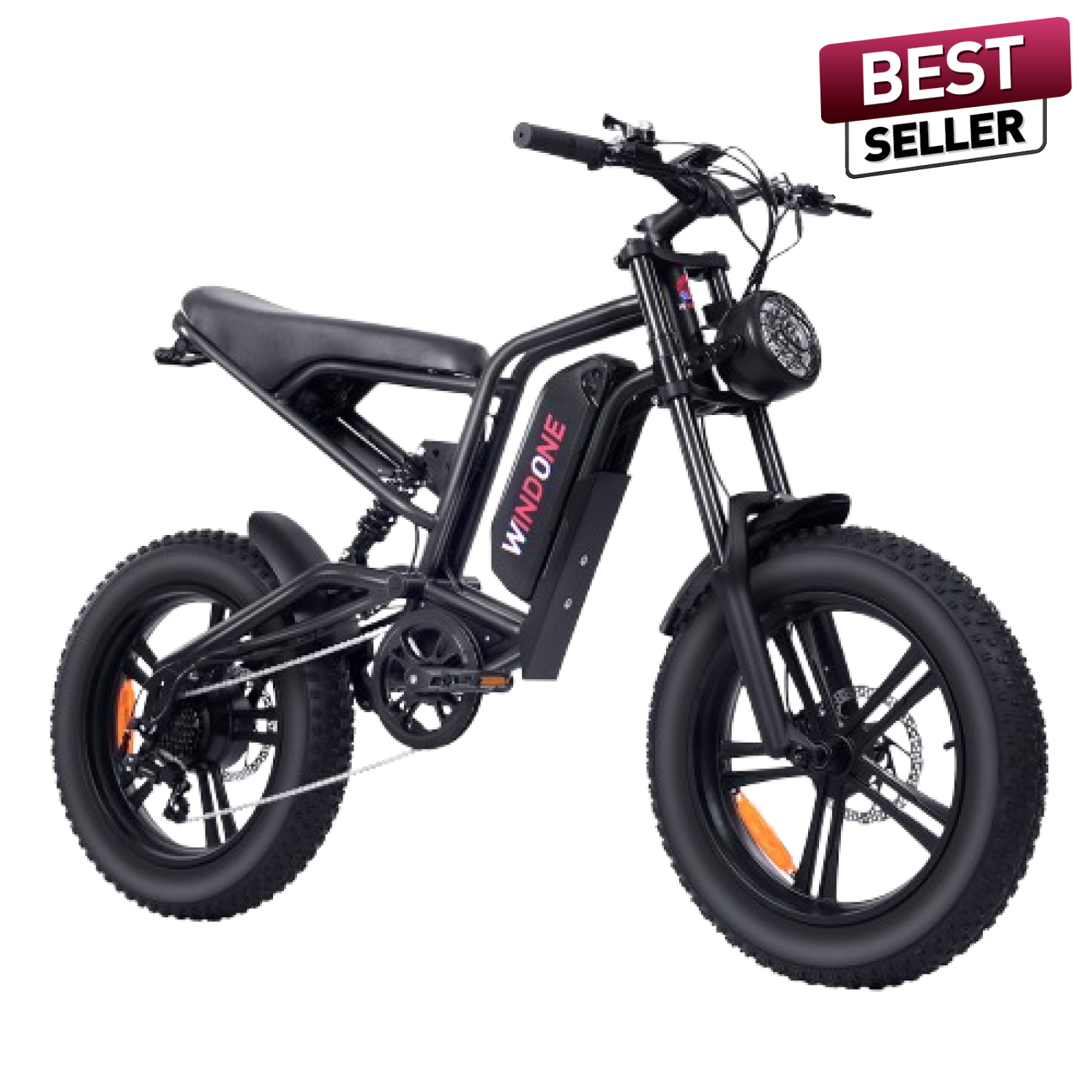
A fat tire e-bike is an electric bicycle equipped with substantially wider tires than those found on conventional commuter or road e-bikes.
Fat tires are commonly around 4 inches wide or more, although exact dimensions vary by model.

The larger contact area can provide useful traction on surfaces where narrow tires may struggle, including:
- Snow
- Sand
- Gravel
- Dirt
- Grass
- Muddy or loose surfaces
- Rough pavement
An electric motor helps offset some of the additional effort associated with wider, heavier tires. As a result, fat tire e-bikes can combine the stability and versatility of wide tires with electric assistance for everyday riding.
Are Fat Tire E-Bikes Good for Commuting?
Yes, fat tire e-bikes can be excellent commuter bikes, but they are particularly well suited to certain types of commutes.
They make the most sense when your route includes:
- Rough or uneven pavement
- Gravel roads or paths
- Unpaved sections
- Frequent hills
- Poorly maintained roads
- Variable weather conditions
- Snow or loose surfaces
If your entire commute is on smooth, paved roads and you prioritize minimum weight and maximum efficiency, a conventional commuter e-bike may be a better fit.
The key question isn't whether fat tires are "better" for commuting. It's whether their additional traction, stability, and versatility are valuable on your route.

Why Fat Tire E-Bikes Can Be Good Commuters
1. Better Traction on Variable Surfaces
One of the biggest advantages of a fat tire e-bike is traction.
A wider tire can provide a larger contact area with the ground, which can be helpful when riding over loose or inconsistent surfaces.
This can be particularly useful in Canada, where a commute may involve more than clean, dry asphalt.
You might encounter:
- Fresh snow
- Slush
- Wet leaves
- Gravel
- Sand
- Potholes
- Uneven pavement
A fat tire doesn't eliminate the risks associated with these conditions, but the additional tire volume and contact area can contribute to a more stable ride.
Tire pressure also matters. Lower pressures can increase the tire's ability to conform to uneven surfaces, while higher pressures generally reduce rolling resistance on firm pavement. Riders should follow the manufacturer's recommended pressure range and adjust appropriately for the terrain and conditions.
2. More Stability on Rough Roads
Canadian roads and multi-use paths aren't always perfectly smooth.
Cracks, potholes, broken pavement, gravel, and uneven transitions can make a narrow-tire bicycle feel less forgiving.
Fat tires can help absorb some of these smaller surface irregularities before they reach the rider.

This doesn't mean the tires replace suspension. A fat tire e-bike with a suspension fork can provide an additional layer of comfort and control on rough surfaces.
For commuters who regularly encounter poor pavement, that combination can be valuable.
3. Useful in Winter Conditions
Winter is where fat tire e-bikes can have one of their biggest practical advantages.
The wider tires can provide more stability on packed snow and loose surfaces than typical narrow commuter tires.
However, it's important not to overstate what fat tires can do.
Fat tires do not automatically make an e-bike safe on ice.
Ice remains extremely slippery, and tire width alone cannot provide reliable traction on every frozen surface. For icy conditions, tire tread, tire compound, pressure, riding speed, and in some cases studded tires are all important considerations.
Winter commuting also requires additional attention to:
- Visibility
- Braking distance
- Battery performance in cold temperatures
- Road salt and corrosion
- Tire pressure
- Local road and path conditions
A fat tire e-bike can improve versatility in winter, but riders still need to adapt their speed and riding technique to the conditions.
4. More Versatility Beyond the Commute
One advantage of buying a fat tire e-bike is that your bike doesn't have to stop being useful when you arrive at work.
The same bike can potentially be used for:
- Weekend trail rides
- Gravel cycling
- Beach riding
- Camping trips
- Park paths
- Recreational riding
- Light off-road exploration
If you want one e-bike to serve both transportation and recreation, a fat tire model can be a practical compromise.

A conventional commuter e-bike may be more efficient on pavement, but a fat tire model can handle a broader range of environments.
5. Electric Assistance Helps Offset the Extra Weight
Fat tires aren't lightweight.
The tires themselves are larger, and the wheels, frame, battery, and motor of a fat tire e-bike can also contribute to a higher overall weight.
That would be a significant disadvantage on a conventional bicycle.
With an e-bike, however, the motor provides pedal assistance, making it easier to accelerate and maintain speed than it would be on an equivalent non-electric fat bike.
For commuting, this means you can benefit from the stability and versatility of a fat tire setup without having to supply all of the additional effort yourself.
The Disadvantages of Fat Tire E-Bikes for Commuting
Fat tire e-bikes aren't perfect. Before choosing one for daily transportation, you should understand the trade-offs.
1. They Are Generally Heavier
A fat tire e-bike is typically heavier than a lightweight road or commuter e-bike.
That matters when you need to:
- Carry the bike upstairs
- Load it into a vehicle
- Store it in a small apartment
- Lift it onto a bike rack
- Maneuver it without motor assistance
If your commute includes stairs or requires frequent transportation by car, weight should be one of your first considerations.
2. Wider Tires Can Increase Rolling Resistance
Fat tires generally create more rolling resistance than narrower tires, particularly on smooth pavement.
That means the motor may need to work harder to maintain the same speed.
For riders whose entire commute consists of smooth asphalt, a narrower tire can therefore be more efficient.
However, the difference isn't necessarily a reason to avoid fat tires. If your route includes gravel, potholes, snow, or other challenging surfaces, the added traction and comfort may be worth the trade-off.
3. They May Be More Bike Than You Need
If your commute is:
- Short
- Flat
- Fully paved
- Well maintained
- Mostly indoors for storage
then a fat tire e-bike may offer capabilities you rarely use.
A lightweight commuter e-bike can be easier to maneuver, store, transport, and pedal.

The best e-bike isn't necessarily the one with the most capability. It's the one whose capabilities match your actual riding environment.
4. Storage Can Be More Challenging
The wider tires and larger frame can require more storage space.
Before buying a fat tire e-bike, measure:
- Your storage area
- Apartment or garage doorways
- Elevator dimensions
- Bike rack compatibility
- Vehicle cargo space
Also check the bike's folded dimensions if you are considering a folding fat tire model.
A bike that works perfectly on the road isn't much use if you can't comfortably store it at home.
Fat Tire E-Bike vs. Regular E-Bike for Commuting
The choice becomes easier when you compare the strengths of each design.
| Feature | Fat Tire E-Bike | Conventional Commuter E-Bike |
| Smooth pavement | Good | Excellent |
| Rough pavement | Excellent | Good |
| Gravel | Excellent | Good |
| Snow | Better suited | More limited |
| Sand | Better suited | Generally less suitable |
| Stability | Excellent | Good |
| Rolling efficiency | Lower | Higher |
| Weight | Generally higher | Generally lower |
| Storage | More demanding | Easier |
| Off-road versatility | Higher | Lower to moderate |
| Urban commuting | Very good | Excellent |
Neither design is universally better.
If efficiency on paved roads is your priority, a conventional commuter e-bike may have the edge.
If you want a bike that can handle your commute and a wide range of surfaces and recreational environments, a fat tire e-bike can be the more versatile option.
Are Fat Tire E-Bikes Good for Long-Distance Commuting?
They can be, provided the bike is equipped with an appropriately sized battery and the route suits the bike.
For long-distance commuting, don't focus solely on the advertised maximum range.
Actual range can vary considerably depending on:
- Rider weight
- Riding speed
- Assist level
- Terrain
- Wind
- Tire pressure
- Temperature
- Stop-and-go riding
- Cargo weight
Cold weather is particularly important for Canadian riders. Lithium-ion batteries generally deliver less usable performance in low temperatures, so winter riders should expect real-world range to differ from a manufacturer's maximum-range claim.

If your commute is long, choose a battery with enough capacity to cover the trip with a reasonable margin rather than planning to use the advertised maximum range down to the last mile.
What Should You Look for in a Commuting Fat Tire E-Bike?
Choosing the right fat tire e-bike requires looking beyond tire width.
1. Motor Power
Motor power influences acceleration and hill-climbing performance.
For relatively flat urban commuting, a moderate-power motor may be sufficient.
If your route includes steep hills, frequent stops, or heavier loads, a higher-output motor can provide more useful performance.
Don't judge a motor solely by its wattage, however. Battery voltage, controller output, rider weight, gearing, and the manufacturer's overall system design also affect performance.
2. Battery Capacity
Battery capacity is typically expressed in watt-hours (Wh).
A larger battery generally provides more energy for longer rides, but range will always depend on riding conditions.
For commuters, consider your round-trip distance, charging opportunities, and seasonal conditions rather than relying exclusively on the maximum range advertised for the bike.
3. Tire Design
Not all fat tires are identical.
Look at:
- Tire width
- Tread pattern
- Puncture resistance
- Tubed vs. tubeless construction
- Recommended tire pressure
If you're primarily commuting on pavement, an extremely aggressive off-road tread may not be necessary.
If you expect to ride on gravel, snow, or trails, a more versatile tread pattern may be preferable.
4. Brakes
Reliable braking is essential for any commuter e-bike, particularly when carrying additional weight or riding in wet conditions.
Hydraulic disc brakes can provide strong and consistent braking performance, while mechanical disc brakes can also be effective when properly maintained.
Whatever system you choose, regular inspection and maintenance are essential.
5. Suspension
A suspension fork isn't mandatory for every commuter, but it can be useful if your route includes potholes, rough pavement, gravel, or other uneven surfaces.
If your entire commute is smooth asphalt, rigid forks may be perfectly adequate.

The right choice depends on your route.
6. Lighting and Visibility
Commuters frequently ride during early mornings, evenings, or poor-weather conditions.
Look for an e-bike with:
- Front lighting
- Rear lighting
- Reflective elements
- A visible frame or lighting system
Even with integrated lights, riders should use appropriate reflective gear and follow applicable Canadian cycling laws.
7. Payload Capacity
If you're using an e-bike for commuting, consider everything you're carrying, not just your body weight.
A backpack, laptop, groceries, panniers, and other equipment all contribute to the total load.
Check the manufacturer's maximum payload rating and avoid exceeding it.
Can You Commute on a Fat Tire E-Bike in Canadian Winter?
Yes, but winter commuting requires more preparation than simply switching to a fat tire e-bike.
Before riding in winter, consider:
Use the Right Tires
Fat tires can provide useful flotation and stability on snow, but tire selection matters. In icy conditions, appropriately designed winter or studded tires may provide substantially better traction than standard tires.
Reduce Your Speed
Snow and ice increase stopping distances and reduce traction. Even a highly capable e-bike cannot overcome the laws of physics.
Keep the Battery Warm
Cold temperatures can reduce battery performance.
If possible, store and charge the battery in a temperature-controlled environment and follow the manufacturer's charging recommendations.
Never charge a battery that is outside the manufacturer's permitted charging temperature range.
Clean the Bike Regularly
Road salt and winter grime can accelerate corrosion.
After winter rides, pay particular attention to:
- Chain and drivetrain
- Brake components
- Electrical connections
- Frame
- Wheels
- Fasteners
Follow the manufacturer's cleaning and maintenance recommendations.

How to Make a Fat Tire E-Bike More Commuter-Friendly
A fat tire e-bike becomes significantly more practical for daily transportation with the right accessories.
Consider adding:
Rear Rack and Panniers
A rear rack can keep your backpack or work equipment off your body and make the bike more comfortable for longer commutes.
Panniers can also provide more convenient storage than a backpack.
Fenders
Fenders are especially useful in Canada.
They can help protect you from water, mud, slush, and road spray when conditions are wet.
High-Visibility Lighting
If you regularly commute before sunrise or after sunset, additional visibility can be valuable.
Use lights and reflective equipment appropriate for your local riding conditions and regulations.
Helmet
A properly fitted helmet should be part of your commuting equipment.
Choose one appropriate for the type of riding you do and replace it according to the manufacturer's guidance after a significant impact.
Lock
If you're leaving your e-bike outside a workplace, station, or store, invest in an appropriate high-quality lock and use secure parking whenever possible.
E-bikes can be expensive, and fat tire models are often particularly recognizable.
Is a Fat Tire E-Bike Worth It for Your Commute?
A fat tire e-bike is worth considering if you want a commuter that can handle more than smooth pavement.
It is particularly compelling when your riding involves:
- Canadian winter conditions
- Rough roads
- Gravel
- Unpaved paths
- Hills
- Mixed terrain
- Weekend recreation
The trade-off is that you will generally accept more weight and rolling resistance than you would with a conventional commuter e-bike.
For riders who spend every day on smooth pavement and want the lightest and most efficient transportation possible, a conventional e-bike may be the better choice.
For riders who want one e-bike that can handle commuting, changing weather, rough surfaces, and weekend adventures, a fat tire model offers a broader range of capabilities.

Why Choose a Windone Fat Tire E-Bike?
For Canadian riders looking for an e-bike that can bridge the gap between everyday transportation and recreational riding, Windone's fat tire e-bikes are designed around versatility.
A capable fat tire e-bike can give you the confidence to take the longer route home, handle rougher sections of road, explore gravel paths on the weekend, or adapt your riding to changing conditions.
The important thing is to choose a model that matches your actual needs rather than buying based solely on motor power, tire width, or maximum range.
Consider your commute first:
How far do you ride? How steep are the hills? What surfaces do you encounter? How often will you ride in poor weather? Where will you store the bike?
Once you answer those questions, it becomes much easier to determine whether a fat tire e-bike is the right commuting solution for you.
Final Verdict
Fat tire e-bikes can be very good for commuting, especially for Canadian riders who encounter rough pavement, gravel, snow, hills, or changing weather.
Their wider tires provide additional traction and stability, while electric assistance helps offset the extra weight and rolling resistance.
The trade-off is that fat tire e-bikes are generally heavier and less efficient on smooth pavement than narrower commuter models.
So, if your commute is entirely flat and paved, a conventional commuter e-bike may be the more efficient choice.
But if you want a versatile, all-season e-bike that can handle the commute during the week and recreational riding on the weekend, a fat tire e-bike can be a highly practical choice.